
2026-10-08 · Mark Harrison
Why Furnaces Struggle During Ohio's January Cold Snaps
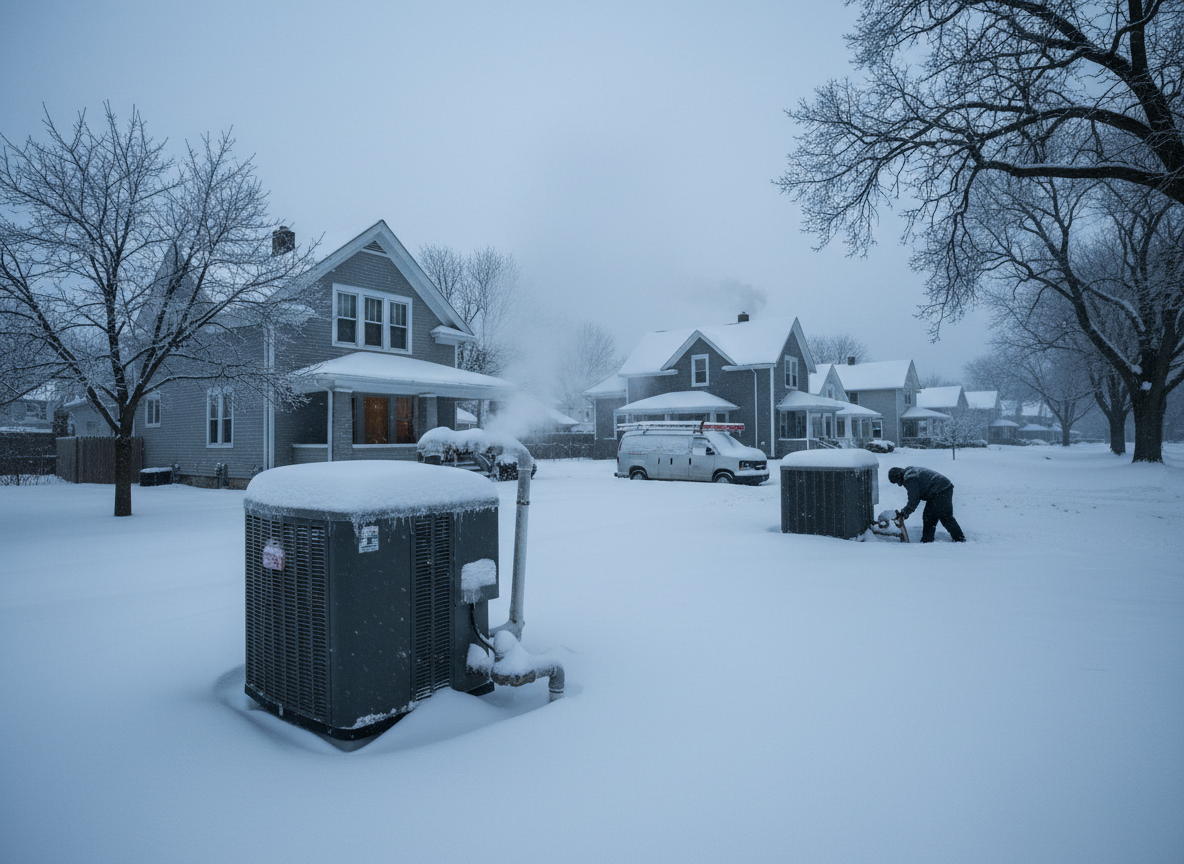
Ohio's January cold snaps frequently cause furnaces to struggle due to a combination of factors: increased demand on the heating system, exacerbated pre-existing minor issues, and the direct impact of freezing temperatures on components. During these periods, when temperatures can drop well below freezing, furnaces run almost constantly, leading to accelerated wear on parts like blower motors and heat exchangers. What might be a minor inefficiency in October becomes a critical failure when the system is pushed to its maximum capacity for days on end. Furthermore, issues like frozen condensate lines, common in high-efficiency furnaces, become prevalent when outdoor temperatures remain consistently low, leading to system shutdowns. Even homes in newer developments across counties like Delaware or Union, with modern HVAC systems, can experience these issues if maintenance has been overlooked, while older homes in established neighborhoods such as German Village in Columbus or Ohio City in Cleveland, often with older furnace models, are particularly susceptible to breakdowns during these intense cold periods.
The Strain of Constant Operation
When January temperatures plummet across Ohio, from the shores of Lake Erie down to the Ohio River Valley, your furnace isn't just working harder; it's working almost non-stop. This constant operation puts immense strain on every component. The blower motor, responsible for circulating heated air throughout your home, can overheat or wear out more quickly under continuous load. Similarly, the heat exchanger, which transfers heat from the combustion process to your home's air, undergoes repeated expansion and contraction cycles at an accelerated rate, increasing the risk of cracks over time. This continuous demand also means that minor issues, like a slightly dirty air filter or a weak igniter, become critical problems. A filter that might last another month in milder weather can quickly become so clogged during a cold snap that it restricts airflow, causing the furnace to overheat or short cycle. This is especially true in older homes throughout areas like Springfield or Mansfield, where ductwork might not be perfectly sealed, causing the furnace to work even harder to maintain temperature.
Common Failures Exacerbated by Cold
Several common furnace failures are directly aggravated by the extreme cold. One of the most frequent culprits is a clogged air filter. During peak heating season, filters accumulate dust, pet dander, and other debris much faster. A heavily clogged filter restricts airflow, forcing the furnace to work harder and potentially leading to overheating or a complete shutdown. Another issue often seen during deep freezes, particularly with high-efficiency condensing furnaces, is a frozen condensate line. These furnaces produce acidic water as a byproduct of combustion, which drains through a PVC pipe. If this line freezes, especially where it exits the home, it can cause water to back up, triggering a safety switch that shuts down the furnace. This is a common call we get from homes in areas like Dublin or Westerville, where modern homes often feature these efficient units. If your furnace is blowing cold air, a frozen condensate line could be the cause. For more specific issues, our team handles all types of Furnace Not Heating problems.
Ignition System Challenges in Winter
The ignition system is another frequent source of trouble when temperatures drop. Whether your furnace uses a pilot light or an electronic igniter, the extreme cold can sometimes interfere with its proper function. For furnaces with pilot lights, strong drafts from poorly sealed windows or doors, more noticeable during harsh winter winds, can extinguish the flame. Even subtle changes in gas pressure during peak demand can sometimes affect pilot light stability. Electronic igniters, while more robust, can also fail due to wear and tear, especially if they are older. A weak igniter might struggle to generate enough heat to ignite the gas consistently when the furnace is cycling on and off frequently. When you notice your furnace attempting to start but failing to ignite, it's often an ignition issue. This can manifest as your furnace trying to turn on but failing, which is a common reason for Furnace Won't Turn On service calls. Understanding these nuances is key to diagnosing and fixing the problem quickly.
Thermostat Malfunctions and Calibration
While not directly caused by cold, thermostat malfunctions often become apparent during extreme weather because the system is under constant demand. An improperly calibrated or failing thermostat might not accurately read the indoor temperature, causing the furnace to run too long or not long enough. In older homes across Ohio, particularly in areas like Canton or Youngstown, you might encounter older mercury-switch thermostats that can become less accurate over time. Modern digital thermostats can also develop issues, such as faulty sensors or wiring problems, leading to erratic heating cycles. During a cold snap, if your furnace seems to be running constantly but your home isn't reaching the set temperature, or if it's cycling on and off too frequently (a condition known as short cycling), the thermostat could be a primary suspect. We often advise homeowners to check their thermostat settings and batteries as a first step. For more insights on this, you might find our article on Signs Your Thermostat Needs Recalibration Before Winter helpful.
The Impact of Neglected Maintenance
Many furnace struggles during January cold snaps are simply the result of neglected annual maintenance. Furnaces are complex machines with many moving parts that benefit from regular inspection and tune-ups. Without routine checks, small issues like loose electrical connections, worn belts, or minor gas leaks can go unnoticed. When the furnace is then subjected to the intense demands of sub-zero temperatures, these minor issues can quickly escalate into major breakdowns. For example, a slightly corroded flame sensor that might work fine during milder months could fail to detect the flame reliably when the furnace is cycling every few minutes, leading to a system lockout. Similarly, dirty burners or a partially blocked flue can reduce efficiency and increase the risk of carbon monoxide buildup, which is especially dangerous when homes are sealed tight against the cold. Regular maintenance ensures these components are clean and functioning correctly, preventing inconvenient and often costly emergency repairs.